
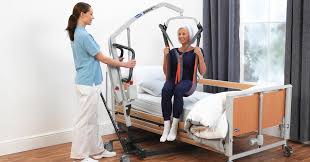
A suitably selected hoist can help transfer a resident while reducing manual lifting demands. Safe use depends on the person, equipment, environment and trained staff; incorrect use can cause serious injury.
Care homes may use mobile, ceiling-track, standing or bathing equipment. Choose the equipment through an individual assessment rather than assuming every hoist is suitable for every resident or transfer.
This guide explains assessment and equipment checks, including the MHRA patient hoists and slings alert issued on 16 September 2026. It supplements the resident’s care plan, manufacturer instructions and practical training.
Key takeaways
- Select hoists and slings for the individual resident and planned transfer, with documented compatibility.
- Different types of hoists serve specific purposes, from mobile units for general transfers to ceiling systems and specialised bathing equipment.
- Training, care planning, maintenance and effective pre-use checks work together to reduce risk.
Understanding hoists in care homes
Hoists provide mechanical assistance for some transfers. Slings, attachments and any safety devices must be suitable for the resident and used in the configuration specified for the equipment.
Definition and purpose of hoists
A hoist is a mechanical device designed to lift and transfer people who cannot move independently. Care homes use these machines to help residents move from beds to chairs, wheelchairs, or bathrooms safely.
A hoist can reduce the need for hazardous manual lifting. It also introduces risks such as falls, trapping or overturning that must be controlled.
Key purposes include:
- Safe patient transfers between surfaces
- Reducing physical strain on care staff
- Maintaining resident dignity during moves
- Reducing hazardous manual lifting
A hoist does not automatically reduce the number of carers needed. The assessment and care plan must specify staffing for the particular transfer.
Role of hoists in supporting limited mobility
A diagnosis alone does not determine which transfer aid is suitable. Assess the resident’s current mobility, communication, comfort and ability to participate.
Hoists support various mobility limitations including:
- Inability to stand from sitting positions
- Weakness in legs preventing weight bearing
- Balance problems that increase fall risk
- Severe arthritis limiting joint movement
Encourage the resident to participate as their assessed abilities allow. Assistance should support independence without asking them to do more than they can safely manage.
Transfers to a bed, chair, commode or bath may need different methods or slings. Document the appropriate approach for each activity.
Key components: slings, safety belts, and devices
Slings are fabric supports that cradle the resident during lifting. Different sling types serve specific purposes — general purpose slings for routine transfers, toileting slings for bathroom visits, and bathing slings for washing.
Slings must be properly fitted to each resident’s body shape and medical needs. Incorrect sling selection can cause discomfort or safety risks during transfers.
Components and safety features to check include:
- The spreader bar and its attachment points
- Sling loops or clips and their secure engagement
- Emergency stopping and lowering arrangements
- The controls and any model-specific safety devices
Regular inspection of all components is essential. Worn slings or damaged safety devices can lead to accidents during transfers.
Care staff must receive training on selecting appropriate slings for each resident and checking all safety devices before every use.
Types of hoists and handling equipment
Care homes use several types of hoists and handling equipment to safely move residents with mobility challenges. Each type serves specific purposes, from mobile units that move between rooms to specialised bath hoists for water transfers.
Mobile hoists and their applications
Mobile hoists move on castors and may be useful where fixed equipment is unsuitable. Assess access, clearance and manoeuvring space for the intended transfer.
Powered mobile hoists use a motor for lifting. Check the battery, controls and emergency arrangements according to the manufacturer’s instructions.
Some hoists use a manually operated hydraulic mechanism. Suitability depends on the resident, task and staff effort; price alone should not determine selection.
Mobile hoists work well for:
- Bed to wheelchair transfers
- Moving residents to toilet facilities
- Repositioning where the equipment is designed for that task
- A planned floor recovery after assessment of the fallen person
Check the marked safe working load for the hoist, sling and accessories. Floors, space and the route must suit the equipment; avoid transporting residents long distances in a mobile hoist.
Ceiling hoists: features and suitability
Ceiling hoists mount on overhead tracks fixed to the ceiling structure. The motorised unit moves along rails to transfer residents between different points in a room.
A track may serve a room or connect areas if designed and installed for that purpose. Confirm the permitted route and any transfer points before use.
Capacity and lifting range depend on the specific system and its installation. Confirm the rated load, track support and compatible sling rather than assuming ceiling hoists have a higher capacity.
Key benefits include:
- Reduced need to manoeuvre a mobile base
- A defined transfer route along the track
- Potential reduction in staff handling effort
- Transfers between points covered by the installed system
Check building suitability, maintenance access and the resident’s transfer needs before choosing a ceiling system. Neither cost savings nor faster transfers are guaranteed.
Fixed hoists and standing aids
Stationary hoists remain fixed in specific locations within care facilities. These units provide dedicated lifting solutions for high-use areas like bathrooms or therapy rooms.
A standing aid requires an individual assessment of weight-bearing, balance, cooperation and the support required. It is not suitable simply because a resident has some leg strength.
Fixed-position hoists stay permanently mounted in one location. Care homes often install them near beds or in bathrooms where regular transfers occur.
Benefits include:
- Equipment available at the assessed transfer point
- A model with a suitable safe working load
- Clearance and access suited to the location
- A planned transfer method for that installation
Assess whether fixed equipment meets all required movements and whether another aid is needed elsewhere. Reassess when the resident’s needs change.
Bath hoists and special purpose equipment
Use bathing equipment designed for the intended wet environment. Select the seat or sling and transfer method for the individual resident.
A pool hoist must be suitable for its location and intended users. Staff need instructions for normal operation, emergencies and safe recovery.
For shower transfers, assess access and the resident’s support needs. Do not assume a general-purpose hoist is approved for wet use.
Features to confirm for the chosen equipment include:
- Suitability for the wet environment
- An appropriate sling or seat and cleaning method
- The specified emergency stopping and lowering method
- Safe storage, charging and maintenance arrangements
Follow the manufacturer’s limits for water exposure, cleaning, charging and storage. Keep equipment out of use if damage or contamination makes it unsafe.
Essential handling aids and transfer tools
Other aids may assist a resident’s movement and reduce manual effort. Select them through assessment and use only for their intended purpose.
Slide sheets and transfer boards
Slide sheets reduce friction during bed-based movements and repositioning tasks. Made from low-friction materials, they slip between the resident and the mattress to help carers move people up the bed or turn them without lifting.
Some systems assist lateral transfers, but a slide sheet is not automatically a lifting sling or a bridge across a gap. Follow the product instructions and assessed method.
Transfer boards provide stable bridges between two surfaces of similar height. These rigid boards help residents move from bed to wheelchair or between chairs with minimal lifting required.
Check the board’s permitted gap, height difference, support and load. Independent use requires assessment of the resident’s ability and instruction.
Do not substitute one aid for another because the movement appears small. Repositioning can still create handling and falling risks.
Turntables and patient turners
Turntables can assist a change of direction for some residents. Assess weight-bearing, balance and the support needed before use.
Use a standing turntable only where the assessment and equipment instructions support it. Do not combine it with another aid unless that combination is appropriate and authorised.
Other turning or repositioning aids may help with bed-based movement. Choose the product for the task rather than treating all patient turners as interchangeable.
Check the particular aid’s design, condition and instructions before use. Features and weight limits vary between models.
An aid may reduce twisting or effort, but staff must still use the assessed technique and maintain the resident’s stability.
Wheelchairs and integration with hoisting
Wheelchairs must work seamlessly with hoisting systems for effective transfers. The chair’s arm rests, foot rests, and brake systems affect how safely residents can be moved.
Assess access around armrests, footplates and the seat. Move removable components only as instructed; fixed armrests are not automatically incompatible with hoisting.
Follow the care plan and wheelchair instructions for brakes and positioning during a transfer. Hoist brake use is model- and task-specific; do not apply a blanket rule to both devices.
Key wheelchair features for hoisting compatibility:
- Access around armrests and footplates
- Reliable brake systems
- Appropriate seat height for hoist clearance
- Sturdy frame construction
Any additional attachments must be approved for the equipment and fitted correctly. Do not assume compatibility from appearance or fit alone.
Assessment and care planning for safe hoisting
Proper assessment and care planning form the foundation of safe hoisting practices in care homes. Each resident requires an individual risk assessment and tailored care plan that specifies equipment needs and handling procedures.
Conducting a risk assessment
Risk assessments must be completed before any hoisting activities begin. These assessments evaluate the resident’s physical condition, mobility level, and specific needs.
Staff should assess the resident’s ability to understand instructions. They must also check for medical conditions that could affect safe transfers.
Key areas to evaluate include:
- Weight and height measurements
- Cognitive ability and communication skills
- Skin integrity and pressure sore risk
- Range of motion and muscle tone
- Previous injuries or medical conditions
Specify the number of carers needed for each transfer. This may differ between residents and tasks; it is not limited to a universal one- or two-person rule.
Environmental factors need consideration too. Room size, furniture placement, and floor surfaces all affect safe hoisting.
Developing individual care plans
Each resident needs a detailed care plan based on their risk assessment results. Care plans must specify exactly how manual handling should occur.
The plan should state which hoist to use for different activities. It must list the correct sling type and size for each resident.
Care plans should include:
- Specific equipment requirements
- Number of carers needed for transfers
- Step-by-step transfer instructions
- Times when hoisting should not occur
- Emergency procedures
Reassess when the resident’s condition or the equipment combination changes, and communicate the revised plan before the next affected transfer.
Keep the care plan accessible to staff who need it while respecting confidentiality. Make sure temporary and agency staff receive the relevant instructions.
Assessing hoist and sling compatibility
Confirm the hoist–sling combination using manufacturer instructions. Physical fit alone does not establish compatibility; the combination must also be suitable for the resident.
Follow the safe working load and loading instructions for every component. The lowest applicable limit governs the system; include accessories where the manufacturer requires them to be counted.
Sling selection criteria:
- Correct size for resident’s measurements
- Appropriate fabric for skin condition
- Compatible attachment system (clip or loop)
- Suitable design for planned transfer type
Staff should inspect slings before each use. Frayed straps, worn fabric, or damaged attachments make slings unsafe.
A toileting sling provides access but may give less support. Use it only for the assessed toileting task and resident; do not substitute it for a general transfer sling.
The September 2026 MHRA alert calls for a documented register of approved hoist–sling combinations. Exceptional combinations need qualified assessment and supporting technical evidence.
Best practices and procedures for safe hoisting
Safe hoisting combines an individual plan, competent staff and equipment that is suitable, checked and maintained. Never leave a vulnerable resident unattended in a hoist.
Safe working procedures and carer responsibilities
Before independent use, staff need instruction and practical competence assessment for the equipment and resident group involved. A general online manual handling certificate alone is insufficient.
Follow the model’s pre-use checks, including attachments and sling condition. Pause after initial load take-up, before fully lifting, to check all attachment points are secure.
Explain the transfer in a way the resident can understand, checking comfort and consent or the appropriate decision-making arrangements.
Staff must select the correct sling type based on the resident’s mobility needs and body shape. Using an inappropriate sling can cause injury or discomfort to the person being moved.
Carers should position the hoist correctly before attaching slings. The equipment must be stable and have clear pathways for movement to prevent accidents.
Emergency procedures must be clearly understood by all staff. Carers need to know how to lower residents safely if equipment fails during a transfer.
Number of carers and communication protocols
Use the staffing level specified in the assessment. Some transfers need at least two carers, for example to operate the hoist while supporting and reassuring the resident; do not assume every transfer has the same requirement.
The number of carers depends on the person, task, environment and equipment. Additional support may be needed to maintain positioning, communication or reassurance.
Agree who coordinates the transfer and how staff will signal movements. Explain the process in a way the resident can understand.
Staff must establish who controls the hoist before beginning any transfer. Only one person should operate the controls to prevent confusion and potential accidents.
Verbal confirmation between carers helps maintain safety throughout the process. Both staff members should agree before starting, stopping, or changing direction during transfers.
Regular inspection and maintenance of equipment
HSE describes six-monthly thorough examination or a competent person’s examination scheme for lifting people. The September 2026 MHRA patient-hoist alert specifies examination intervals not exceeding six months. These checks are distinct from servicing and pre-use checks.
Daily visual checks by carers complement formal inspections. Staff should look for obvious damage, wear, or malfunction before each use.
Follow the manufacturer’s servicing schedule and service-life information. Maintenance reduces the chance of failure but does not replace statutory thorough examination.
Remove defective equipment from use and arrange a safe alternative transfer plan. The 2026 MHRA alert also requires removal of hoists with overdue examinations or unresolved defects.
Keep examination, maintenance and device records current. Identify each hoist and sling so staff can check its status before use.
Training and compliance in health and social care
Employers must provide suitable training and supervision and manage equipment risks. Assess competence in the actual task rather than relying on course attendance alone.
Manual handling training for carers
Provide relevant hoist and sling training before staff carry out transfers independently. It should cover the equipment, resident needs, checks and local reporting arrangements.
Training programmes should include:
- Risk assessment procedures for each resident
- Equipment inspection checks before use
- Sling selection and fitting techniques
- Emergency procedures when equipment fails
Trained carers learn to identify when hoisting is appropriate and when alternative methods are safer. They must understand each resident’s specific mobility needs and care plans.
Practical demonstrations are essential for building confidence. Carers should practice with different hoist types under supervision before working independently.
Provide regular updates based on risks, changes and observed needs. New equipment or gaps in competence require action; there is no universal annual refresher interval for every hoist task.
Adhering to legal and regulatory requirements
In Great Britain, LOLER and PUWER apply to relevant lifting equipment used at work. Northern Ireland has separate equivalent regulations; care regulation also differs across the UK.
The MHRA alert issued 16 September 2026 sets 16 September 2027 as the deadline for its actions. Providers should review checks, compatibility, device inventories, examination records and training now; the deadline does not justify continued unsafe use.
The Provision and Use of Work Equipment Regulations (PUWER) also apply to hoist equipment. These require:
- Suitable equipment for the intended use
- Proper maintenance schedules
- Adequate training for all operators
- Clear operating procedures
CQC regulates relevant care providers and patient safety in England. Other UK nations have their own care regulators, while workplace equipment duties also involve health and safety enforcement.
Ensuring ongoing competency and supervision
Check competence through observation and review of actual transfers. Use findings to improve the equipment, method and instruction.
Set supervision and spot-check arrangements according to the risks and staff needs. A monthly interval is not a universal legal requirement.
Supervise new or unfamiliar staff until they can demonstrate the required competence. The length of supervision depends on the person and tasks.
Report incidents and near misses locally and use the MHRA Yellow Card route for device concerns where appropriate. Stop unsafe use while the concern is investigated.
Keep records of role-appropriate training, observed competence and updates, rather than treating an initial certificate as permanent authorisation.
Promoting independence and wellbeing with hoists
Appropriate assistance can help residents participate in daily life. Plan transfers around their preferences, comfort, abilities and safety.
Supporting resident dignity and comfort
Discuss how the resident wishes to be supported and explain the proposed transfer. Respect privacy and consent, with appropriate decision-making support where needed.
Check comfort and support during the transfer. Stop and reassess if the resident is distressed or in pain rather than assuming the selected sling is suitable.
Select and fit the sling for the individual, including skin and postural needs. Recheck suitability if those needs change.
Protect privacy through preparation, communication and appropriate covering. Do not reduce staffing below the assessed requirement to improve privacy.
Offer clear explanations and reassurance, allowing time for the resident’s response. Familiarity can help, but fear or distress should not be ignored.
A standing aid may support participation in toileting where assessed as suitable. It is not appropriate for every resident or a substitute for the support they need.
Enabling greater autonomy through safe use
An appropriate transfer method can help a resident reach a wheelchair or other suitable seating. Use the wheelchair or other intended transport method for longer journeys.
Discuss which daily activities and social opportunities the resident wants to access. Include these aims when planning movement and assistance.
Invite participation where possible and explain who will do what. The degree of independence depends on the resident and the task.
Some residents can operate or participate in an assessed transfer. Confirm this in the care plan and review it if their abilities change.
Safe access to different spaces can support choice and social contact. It does not, by itself, guarantee improved mental health or cognition.
Keep equipment available and the care plan current so staff can follow a consistent approach. Listen to feedback from the resident and carers.
Sources & references
- HSE — Moving and handling equipment in health and social care
- HSE — Moving and handling: managing the risk
- HSE — Getting to grips with hoisting people
- HSE — Lifting equipment used for lifting people
- MHRA — Patient hoists and slings safety alert, 16 September 2026
- HSE — Provision and Use of Work Equipment Regulations
- CQC — Regulation 12: safe care and treatment (England)
Make sure your team is trained in safe manual handling.
Explore the Manual Handling Training Course →
Mark writes about workplace health & safety, manual handling and accredited online training for Manual Handling Training, part of Online CPD Academy.